Koru Riverside Retreat is the sort of place that quietly rewards a camera bag. The river, the bush, the deck light, and the way the property sits inside the Coromandel landscape give you more than one kind of frame. That matters, because a good photography stay is not only about finding one famous view; it is about finding enough honest scenes to keep your eye alert.
When people look for a place like this, they usually carry the same few questions: Where does the light land best? Which spots feel most like the retreat? How do I take photos that look calm instead of cluttered? What should I do if I only have a phone and not a heavy camera bag? As Ansel Adams put it, “You don’t take a photograph, you make it.” I like that line here because Koru gives you the raw material; the photo comes from the choices you make with it.
Two simple guides are worth keeping close before you start shooting. Adobe’s rule of thirds guide is a good reminder that composition can stay simple and still feel strong. National Geographic’s landscape photography tips make the same point in a different way: spend time, scout the frame, and let the light do some of the work. That is the right approach for Koru. The place is scenic, but it is also subtle. You get better photographs when you stop rushing past the details.
By the end of this guide, you will know the best spots to photograph around the retreat, the practical settings and habits that help beginners, and the small guest moments that tend to become the memorable pictures. You will also have a simple day plan you can use whether you are staying for one night or a long weekend.
In this article, I will cover:
- The most useful photography spots around Koru Riverside Retreat
- Beginner-friendly tips for photographing bush, water, and soft light
- The kinds of guest moments that tend to photograph well
- A simple plan for turning one stay into a good sequence of images
A quick glossary before the camera comes out
Photography gets easier when the language is plain. You do not need a wall of jargon to take a better picture at Koru. You only need a few terms that help you notice what is already in front of you.
| Term | Plain meaning | Why it matters here |
|---|---|---|
| Golden hour | The softer light just after sunrise and just before sunset. | It makes the bush and water feel warmer and less harsh. |
| Leading line | A path, edge, river, or railing that guides the eye into the frame. | It helps a photo feel organized without looking forced. |
| Negative space | Open space around the subject. | It keeps a bush or river scene from feeling crowded. |
| Foreground | The part of the scene closest to you. | Adding a fern, rock, or railing in front gives the image depth. |
| Handheld | Shooting without a tripod. | Useful for easy, spontaneous shots around the retreat. |
If those ideas already sound familiar, good. That means the real work is not learning new words; it is noticing what changes when you shift a few feet, wait a few minutes, or turn your body slightly toward the light. Nature photography is often less about gear and more about attention.
The best photography spots around Koru
I would divide Koru into five reliable photography zones: the river edge, the bush-framed house view, the deck, the ferny paths and close details, and the wider dusk sky. Together they give you a useful set of pictures without making you work too hard. That is the charm of a retreat like this: the scenes are varied, but they are close enough together that you can revisit them when the light changes.
| Spot | What to photograph | Best time | Why it works |
|---|---|---|---|
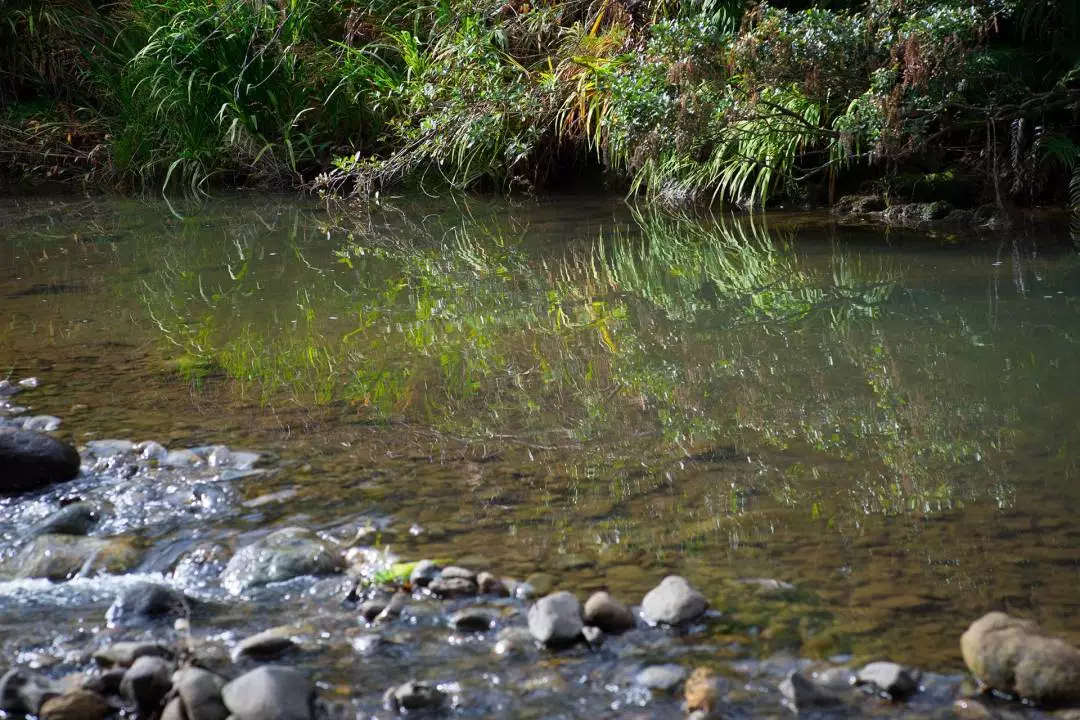
| River edge | Reflections, rocks, still water, and the first light on the bush | Early morning | The water is calm and the light is gentle. |
| House through the trees | Framed views of the retreat through ferns and palms | Late morning or late afternoon | It gives the place context without flattening it. |
| Deck and seating area | Cups, chairs, open space, and warm interior light | Golden hour and dusk | The contrast between warm and cool tones is strong. |
| Fern-lined paths | Leaves, textures, moisture, shadows, and close details | After rain or in soft shade | Texture becomes the subject. |
| Open sky and reflections | Last light, cloud color, silhouettes, and wider scenes | Sunset into blue hour | The retreat feels larger when the sky opens up. |
1. River edge at first light
The river is the easiest place to begin because it gives you a clear subject without demanding cleverness. At first light, the water often carries a soft reflection and the bush begins to separate into layers instead of one flat wall of green. That is exactly the sort of moment beginners should look for: a scene with structure already in it.
Stand still for a moment before you shoot. Look at the edge of the water, the rocks, and the line where the river disappears. Then move a little lower or a little farther back and see how the reflection changes. A small shift in position often matters more than a new setting on the camera. If you are using a phone, tap to focus on the water, turn on the grid, and let the frame breathe instead of filling it with every tree in sight.
If the morning is cool and quiet, try a few versions: one wide shot that shows the river bending through the bush, one tighter frame with the rocks and reflections, and one image where the water sits low in the frame with more open space above it. That gives you a small series instead of a single lucky frame.
2. House through the trees and palms
This is the retreat view that tends to make the place feel like itself. The building is never just a building here. It sits inside the landscape, and the landscape is part of the story. That means the best photograph is usually not the one that shows everything at once. It is the one that uses a branch, fern, or palm to frame the house and give the eye a path inward.
Take a few steps to the left, then to the right, and notice how the trees change the shape of the image. If you stand too squarely in front of the house, the picture can feel ordinary. If you use the vegetation as a frame, the scene becomes more layered. That is a basic trick, but it is a good one. Canon’s composition guide makes the same point in plain language: place the subject with intent and let the frame support it.
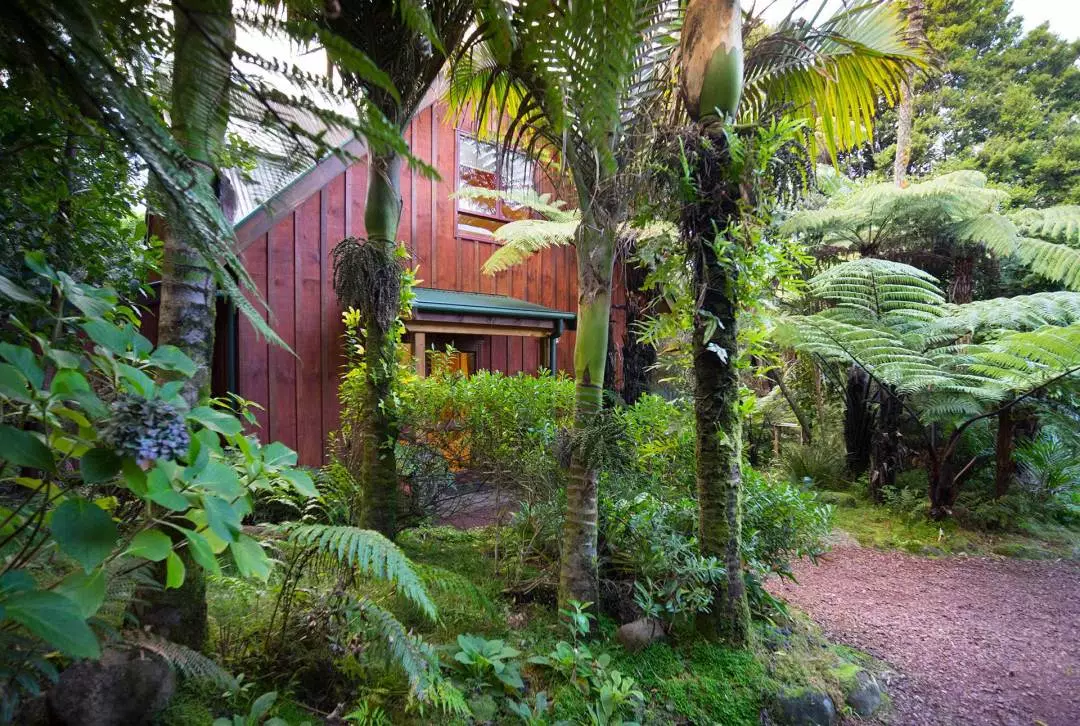
For this spot, I would shoot both vertical and horizontal versions. A vertical frame can make the trees feel taller and the retreat more tucked in. A horizontal frame can show how the building sits inside the setting. Both are useful. One tells you what the place looks like; the other tells you how it feels to stand there.
3. The deck at late afternoon
The deck is where Koru starts to feel lived-in. You get chairs, railings, open space, and often a warm contrast between the outside light and the calmer interior glow. This is the scene that works best when you stop thinking like a landscape photographer for a minute and start thinking like a guest. What details make the place feel restful? A cup, a notebook, a plate, a folded towel, a pair of shoes, or even just the empty chair can do more work than a grand wide shot.
The late afternoon is especially good because the light begins to lean. It softens the hard edges and gives the wood, glass, and plants a warmer tone. If you are shooting into the light, do not fight it too hard. Try a silhouette, a partial reflection, or a frame that keeps some detail in shadow. A simple half-lit scene can feel more inviting than a perfectly bright one.
I would also recommend taking one photograph that shows the deck without any people in it and one that includes the trace of human use. That contrast is useful. It tells a small story: this is a scenic place, but it is also a place to settle in and stay awhile.
4. Fern-lined paths and close details after rain
Some of the best nature photos at Koru will not be wide views at all. They will be the close ones: the edge of a fern, the dark bark of a tree, droplets on leaves, moss on rock, or the way a path disappears into shade. These details are easy to ignore if you only chase the big scene, but they matter because they give the stay texture. A good retreat album should include both the broad view and the quiet evidence that you were really there.
After rain, the bush usually behaves better for photography. Colors deepen, leaves catch small highlights, and the ground takes on a richer tone. You do not need a macro lens to benefit from that. A phone will do if you get close enough and keep the image clean. Shoot a little wider than you think you need, then make one tighter frame for comparison. That gives you options when you review the pictures later.
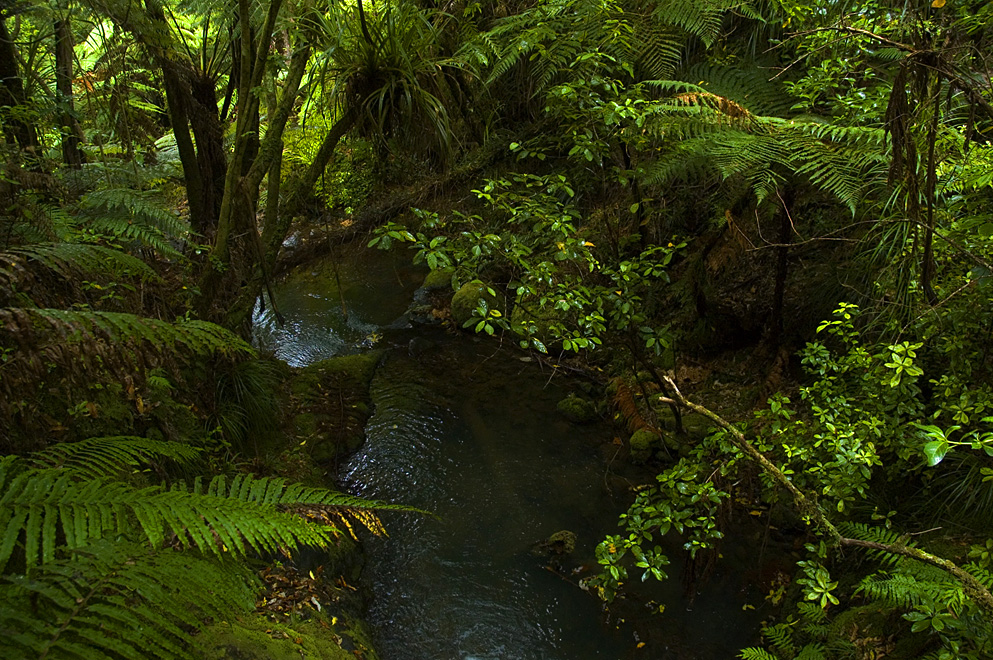
If the light is flat, do not give up on the scene. Move closer to a fern, use a darker trunk as a frame, or lower your angle so the background simplifies. Flat light is not a failure. It is just a cue to look for smaller subjects instead of bigger ones. That is a useful habit anywhere, and especially here.
5. The last-light sky and reflections
Blue hour is a gift at a place like this. Once the sun drops, the sky keeps a little color, the river or wet ground may catch the remaining light, and the whole property feels more still. This is the time for wider images that include space above the bush line and maybe a hint of silhouette. It is also the time when a beginner can make a surprisingly good photograph simply by slowing down and not moving too much.
If you want a practical rule, keep one or two steps back from where you think the picture should be and look for a line that anchors the frame: the river edge, the deck railing, a path, or the roofline of the retreat. If the sky is doing something interesting, give it room. If the foreground is more interesting, let it take over. The point is not to force balance where the scene already has a mood.
A phone works here too, especially if it has a night mode. Keep your hands still, take more than one frame, and do not expect every low-light image to be crisp and glossy. A softer shot can still be the one that feels most like the evening. This is the part of the day where the retreat starts to look like a memory instead of a location.
Practical tips for capturing nature photos
The good news is that you do not need advanced gear to photograph Koru well. The bad news is that you do need to slow down enough to notice what the light is doing. That is usually the real divide between a decent picture and a forgettable one. B&H’s explanation of the exposure triangle is useful if you want a plain-language reminder that aperture, shutter speed, and ISO work together. You do not need to memorize every term before you start, but it helps to know why the camera changes when one setting changes.
Here is the short version I would use on a retreat like this:
- Use the grid on your phone or camera so the frame stays level.
- Keep the horizon straight unless you have a clear reason not to.
- Move your feet before you touch a setting; a better angle is often free.
- Take one safe shot, then one slightly different version.
- Look for a foreground object so the scene has depth.
- Come back to the same place at a different time of day if you can.
Those habits do not sound dramatic because they are not dramatic. They are practical. But practical usually wins. A photographer at Koru will get better results by shooting the same river twice than by trying to find a brand-new mystery viewpoint every fifteen minutes. Scouting and patience often do more than gear. That is the point National Geographic keeps making in its landscape photography guidance, and it holds up well here.
| Situation | What I would try first | What it helps with |
|---|---|---|
| Bright water and sky | Use a slightly lower exposure or tap the brightest part of the scene to protect highlights. | It keeps the river and sky from looking washed out. |
| Shaded bush | Step closer, steady your hands, and raise ISO only as much as needed. | It keeps the image clear without adding too much grain. |
| Deck at dusk | Use the warm interior light as part of the scene instead of trying to remove it. | It gives the photo a sense of place and comfort. |
| Moving water | Take one version with a faster shutter for texture and one slower version for softness. | It gives you two different moods from the same spot. |
| Too much clutter | Step sideways and simplify the background before you crop. | It makes the subject easier to read. |
If you are newer to composition, keep one more reference handy: Adobe’s rule of thirds guide. It is not a commandment. It is just a useful way to stop centering everything by default. At Koru, that can mean placing the river slightly off center, letting a fern enter from one edge, or leaving empty space above a reflection so the photo feels calm instead of cramped.
For guests using a phone, the main tricks are surprisingly old-fashioned: clean the lens, tap to focus, and pause before you shoot. A phone is happiest when the photographer behaves a little more like a lookout and a little less like a machine. That is a good trade.
What guests tend to remember first
I like this part of the article because it keeps the photography advice honest. The best pictures are not always the most technical ones. One guest-style note that fits Koru goes like this: “I went out for one quick river shot before breakfast and came back with a whole sequence because the light kept changing.” That sort of small, concrete surprise is what a stay here tends to give you: quiet, privacy, and the feeling that the landscape is doing most of the work.
A few recurring moments tend to show up in guest stories and in the kinds of photographs people keep on their phones:
| Guest moment | What tends to be photographed | Why it sticks |
|---|---|---|
| First arrival | The river, the driveway, and the first view of the house through the trees. | It marks the instant the pace changes. |
| First pause outside | A chair, a cup, the deck edge, or a broad view with nowhere urgent to be. | It feels like the stay beginning to work on the day. |
| After a walk | Leaves, wet paths, and details that are easier to notice once the body has slowed down. | The photo carries the memory of movement and rest together. |
| Last morning | One final river shot, the empty deck, or the bush in soft light. | It closes the stay with a calm frame instead of a rush. |
What I notice in those moments is that the picture often improves after the first shot. Guests start with the wide scene because that is the obvious one, then they naturally move toward a smaller detail or a different angle. That sequence makes sense. It is how people settle in. First they document the place. Then they begin to see it.
That is why I would not obsess over a single hero photo. A stronger set usually includes one broad landscape, one framed view of the retreat, one detail shot, and one softer evening frame. Together, those images tell a fuller story than any one picture can.
A simple photo day at the retreat
If I were spending a full day photographing Koru, I would keep the schedule loose and practical. The goal would not be to produce a giant gallery. It would be to leave with a balanced set of pictures that feel like the place.
- Early morning: start at the river edge and look for reflections, mist, and quiet bush detail. If you want to time that first walk, a sunrise calculator such as timeanddate’s sunrise and sunset tool is an easy helper.
- Late morning: photograph the house through the trees before the light gets too harsh.
- Midday: rest, review a few frames, and shoot small details instead of forcing broad scenes.
- Late afternoon: move to the deck and capture warmer light, seating, and the shift toward evening.
- Blue hour: come back to the river or an open view and let the sky close the day for you.
Behind that easy rhythm is some real back-office work: image uploads, replies, seasonal updates, and keeping the site itself tidy. For small hospitality teams that want to think carefully about where automation genuinely helps, AI consulting services can help figure out where AI fits without turning the workflow into a science project. That kind of guidance is most useful when it keeps the business human and simply removes a few of the repetitive edges.
The same idea applies to the guest experience. The more the practical pieces are handled well, the easier it is for visitors to notice the river, the bush, and the changing light. That is what a retreat should do: clear some noise away and leave the good parts visible.
Booking information and next steps
If Koru feels like the kind of place you would want to photograph, the next step is simple. Start with the Home page for the overall feel of the retreat, use About to understand the setting a little better, and go to Contact when you are ready to ask about dates or make a booking enquiry. If you are choosing between a romantic stay, a quiet reset, or a short creative break, those pages will point you in the right direction without making the process harder than it needs to be.
I would keep the decision plain: if you want a property that gives you water, bush, warm light, and enough room to photograph without fighting the scene, Koru is a strong choice. You do not need to be a professional to get good images here. You only need to arrive, slow down, and look twice.
Key takeaways:
- Koru Riverside Retreat offers a range of scenes that work well for both landscape and detail photography.
- The river, bush-framed house view, deck, and dusk light are the most reliable spots to start with.
- Simple composition habits, especially the rule of thirds and careful scouting, make a clear difference.
- Guest moments tend to be strongest when they feel calm, lived-in, and unforced.
- A loose, light-aware schedule usually produces better photos than a packed one.
If you want the practical next step, check the pages above, choose the kind of stay you want, and ask the question that matters most: what would I like to remember when I look at these photos later?