Want photos that actually feel like your stay? The trick isn’t fancy gear—it’s timing, attention, and a few simple habits that help you capture Koru Riverside Retreat the way your memories remember it.
When you search for ways to photograph your retreat, you usually want answers to questions like:
“The camera is an instrument that teaches people how to see without a camera.”
(According to education resources from the photography museum community, seeing is a skill you can practice.)
At Koru, that practice matters: the river light changes quickly, the bush is full of texture, and the most photogenic moments often happen between “schedule” moments. For broader guidance on outdoor light and exposure, the Nikon Learn & Explore photography tips are a solid starting point.
In this guide, you’ll learn best times of day to photograph the retreat, practical techniques for nature and amenities, and how to plan a simple photo experience—so you end up with images you’ll be happy to relive.
Table of contents
- Best times of day for photography
- Tips for photographing nature and amenities
- Guest photography experiences
- Conclusion and booking information
Best times of day for photography
Koru’s beauty shows up differently depending on the sun angle and weather. If you want images with depth (not just “bright”), aim for these windows:
Golden hour (early morning + late afternoon)
- Why it works: softer light flatters faces, and warm tones make the bush and river feel cinematic.
- What to shoot: house exterior through trees, river reflections, deck scenes at dusk starting to glow.
- Quick tip: step one pace to the side to avoid “flat” lighting on your subject.
Blue hour (right after sunset)
- Why it works: the sky adds atmosphere while warm indoor lights start to appear in the frame.
- What to shoot: windows and doorways with a soft background (bush silhouettes look great).
Overcast and after rain
- Why it works: cloud cover reduces harsh shadows and makes greens look richer.
- What to shoot: close-ups of leaves, textures around the deck, and misty river angles.
Practical next step: choose one photo session per day—20 to 40 minutes is plenty—so you don’t spend the whole stay hunting for “the perfect moment.”
Tips for photographing nature and amenities
Here’s how to photograph Koru like you’re telling a story: place (where you were), feeling (the mood), and details (the textures you’ll forget first).
1) Photograph the river like it’s a moving person
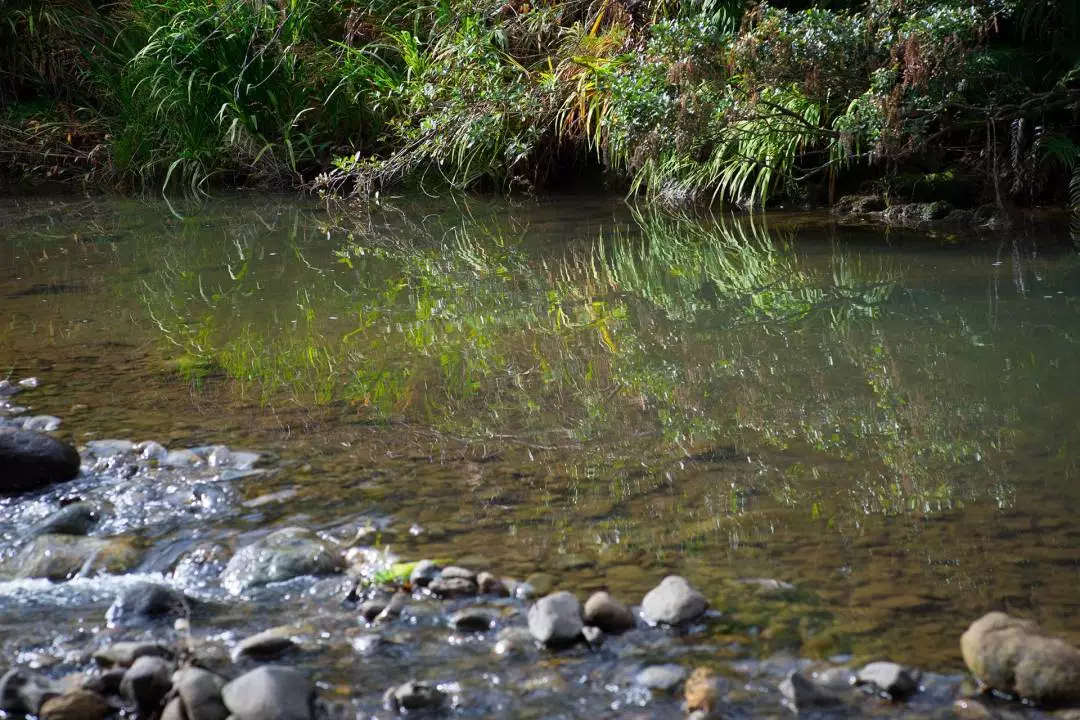
- Look for reflections: shoot when the surface is calm, then shift slightly to catch ripples.
- Use a simple framing rule: put the water on one third of the image and the bush texture on the other two.
2) Capture the house without making it look “tall and empty”
- Try “through-the-trees” compositions: line up trunks/ferns as natural borders.
- Move your feet: tiny angle changes can turn a flat shot into one with leading lines.
3) Make sunset deck photos feel intimate, not staged
- Include one “anchor” object: a drink glass, a book, or a candle—something that gives scale and story.
- Let light lead: position subjects so they face the warm light, not the bright sky.
4) Photograph bedding and spa moments with clean light
- Bed/room images: open curtains fully; shoot from a corner to show space.
- Spa atmosphere: turn on whatever lighting you have, then focus on mood—soft backgrounds are usually more flattering than overexposure.
5) Use phone settings (and basic habits) that actually help
- Tap to focus: always tap the subject before pressing the shutter.
- Clean the lens: fingerprints are the silent enemy of crisp detail.
- Hold steady: use both hands and rest elbows if you’re shooting near water or in low light.
For more on practical camera guidance (including exposure and composition basics), see Digital Camera World’s landscape photography guide.
Guest photography experiences
Not every guest wants the same kind of photos. A helpful approach is to choose a mini “photo brief” before you start:
| Guest style | What to aim for | Simple prompts |
|---|---|---|
| Romantic moments | Warm light, shared scenes, soft details | “Where does the light look best on us?” “What detail feels like the evening?” |
| Nature lovers | Texture, river mood, bush silhouettes | “What do the ferns and trunks frame?” “Where is the reflection strongest?” |
| Food + amenities | Deck atmosphere, table scale, comfort details | “What’s the one object that sets the scene?” “Can I show the whole moment, not just the plate?” |
| Minimalists | Fewer photos, stronger composition | “What’s the cleanest frame?” “What single detail sums up the stay?” |
Quick workflow that saves time:
- One wide shot (show place + mood).
- Two detail shots (texture + intimacy).
- One “you were here” photo (faces optional, but scale helps memories).
Conclusion and booking information
If you capture Koru Riverside Retreat the way it feels—by working with the light and focusing on a few reliable photo ideas—you’ll end up with photos that don’t just look good on your phone. They’ll bring the stay back.
- Plan one session per day (20–40 minutes) rather than chasing perfect shots all day.
- Use golden hour and blue hour for the most flattering light.
- For nature, prioritize reflections, framing, and texture.
- For amenities, shoot for mood and include one anchor detail for story.
Ready to experience it (and photograph it)? Explore the retreat on our home page, learn more about the setting and stay in our about section, or get in touch through contact if you have questions.